
(It's your belief system you built decades ago, still running in the background.)
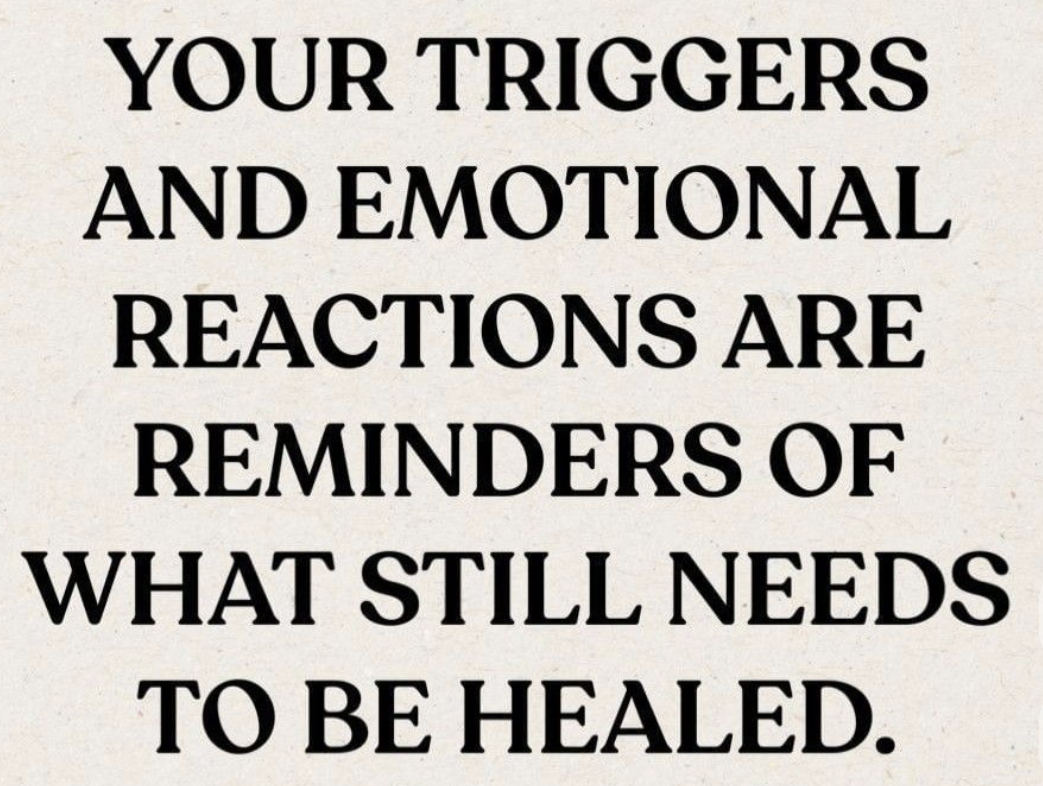
Do you know your triggers?
Maybe you should get to know them.
Because after all, they are your triggers. Not somebody else's.
The thing about triggers is that they started somewhere. They've got roots. And like everyone who has ever dyed their hair knows, when your roots are showing, it can be kind of... uncomfortable.
When you're "triggered," you're typically experiencing the unpleasant activation of something deep. A memory, emotion, body sensation, and often, a corresponding belief rise up from the depths of your unconscious mind and rattle the ever-loving shit out of you.
I know. I have them, too.
In the early 1990s, Jeffrey Young mapped out some of our most common and most painful belief systems in his work on Schema Therapy, what he called Early Maladaptive Schemas. When we're triggered, it's those belief systems and their corresponding feelings from when they first took hold in us that are getting triggered.
We tend to respond in the same old ways using the same old defense mechanisms we used way back when. They're basically old survival strategies that made sense once and now tend to hurt more than they help.
Here's a few examples:
Self-Sacrifice
Your mom is in distress and relying on your emotional support. You know she's lonely, and you feel badly for her when she tells you about her upsetting situation. You have a packed week with work, social commitments and other activities planned. She asks you to visit, and even though you're already as booked as you can comfortably be, you agree to a visit with her. You immediately feel heavier and a sense of being pressed upon, but you rationalize that you can make it work, so you should. Somewhere underneath the "should" is a belief you've carried a long time: that your needs matter less than hers, and that being good means being available no matter the cost.
Emotional Deprivation
You meet a new friend and are excited to get to know them. You spend lunch together and eagerly ask questions to learn about their life, but as your time together winds down, you realize they haven't reciprocated an interest in you. You leave feeling deflated and unseen, and you think to yourself, "well, this is just another typical friendship where I don't really get fulfilled, but at least it's some kind of a connection... I guess I just need to be happy with that." Downtrodden, you arrive at home and check out of your feelings by binging episodes of your favorite shows and online shopping.
Subjugation
Your partner suggests a restaurant for date night. You've been longing for sushi, but he wants burritos. Before you even fully connect with the desire for sushi and form the thought to name it, you're already saying "sure, burritos sound good." After all, he hates sushi and would be annoyed at having to figure out something to eat at the Japanese restaurant anyway. Later, a friend asks what you want to do this weekend and you catch yourself doing the same thing: scanning for what she wants first, then quietly tucking your own preference away like it was never really an option. It's not that you don't know what you want. It's that some old, well-worn part of you learned it was safer, easier, or simply expected to just go along.
Which one hits closest to home? Hit "reply" and tell me, I read every one. But here's the thing about all three of them:
Each is a common pattern, and each one chips away at your connection to yourself. Over time, that adds up to something bigger: self-betrayal, self-abandonment, a slow drift away from your own life. And once you've lost yourself, life gets pretty unsatisfying. Dissatisfaction has a way of curdling into depression if it goes unaddressed long enough.
So, instead...
Bring yourself back online. Reconnect with your emotions, your body, and the story underneath both. That stuff that happened when you were growing up, the stuff that shaped how you show up now? It's not nothing. It's the material that leads to your triggers and the vulnerable places that get activated inside. And once you understand it, you can start to work with it instead of against it.
This is the work I built Sacred Self-Trust to do. Five layers, starting with your body and your Origin Story, moving through to the Relational Self, where patterns like these are still quietly running the show.
The pilot cohort opens this fall, and it's small on purpose. Waitlist members get first access before it opens to the public.

P.S. Not ready to commit but curious how the five layers actually work? [Here's a closer look at the framework →]



Responses